Canadian Council for Refugees
Client
Sectors
Human Rights
Services
Campaigns
Strategy & Messaging
Website Design
Training & Speaking
Over the last few years, the Canadian public’s support for immigrants and refugees has declined. At the same time, the federal government has backtracked on policies favourable to newcomers — as seen through funding cuts, political messaging, and legislation.
Like many countries, Canada is experiencing rising costs of living and pressures on our public services, and immigrants and refugees are being unfairly blamed for these economic issues. Our campaign highlighted that certain politicians, at home and abroad, point the finger to scapegoat newcomers rather than addressing the root causes of the cost of living crisis, like government inaction on housing.
Seeking to strengthen public support for newcomers, the Canadian Council for Refugees wanted to build a movement, and ultimately improve public opinion on immigrants and refugees.
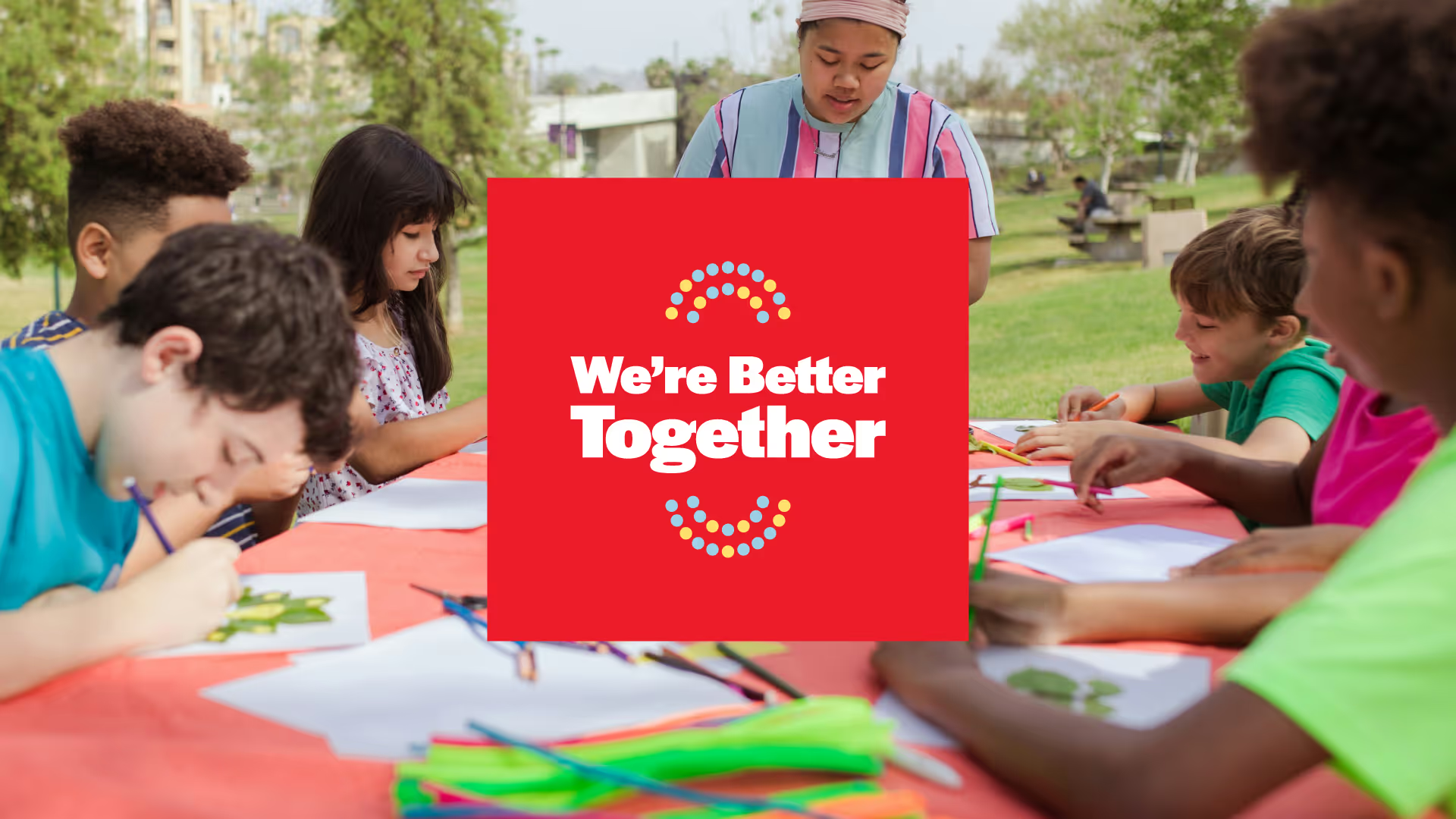
The resulting campaign brings the settlement sector, partners, and allies under one unified banner: 'We’re Better Together'. Also known as 'On fait mieux ensemble' in French, the campaign name and materials were carefully translated to resonate in a francophone context.
As part of the campaign launch, we led training sessions for the Canadian Council for Refugees' members and partners, covering how to get involved with the campaign.
At the core of the 'We're Better Together' campaign is collaboration between advocacy organizations, service providers, allies, and the average Canadian, to join in calling for a Canada that includes everyone.



Research and Message Testing
How do you know, for certain, that your messaging persuades your target audiences? Starting with research ensures that your campaign is grounded in an evidence-based approach, rather than a mere hunch.
The Canadian Council for Refugees conducted research in English and French in collaboration with ASO Communications, Keith Neuman, and EKOS Research, reaching over 2,000 people from all across Canada. The results were used to tailor the campaign messaging, ensuring that it would resonate with Canadians.
The research found that although anti-newcomer hate and blame is on the rise, the majority of Canadians are still supportive of immigrants and refugees. More Canadians support than oppose immigration and believe in the positive role of immigrants in Canadian society (66% versus 20%). However, the research also uncovered that our base, meaning Canadians who support immigrants and refugees, aren't loud enough about their support.
Informed by the commissioned research, we set out to create a campaign that spoke to the average Canadian’s pride in their community, their hope for the future of Canada, and that would reflect the truth of how certain politicians stoke division, when they should be creating solutions to our problems.
Message Guide
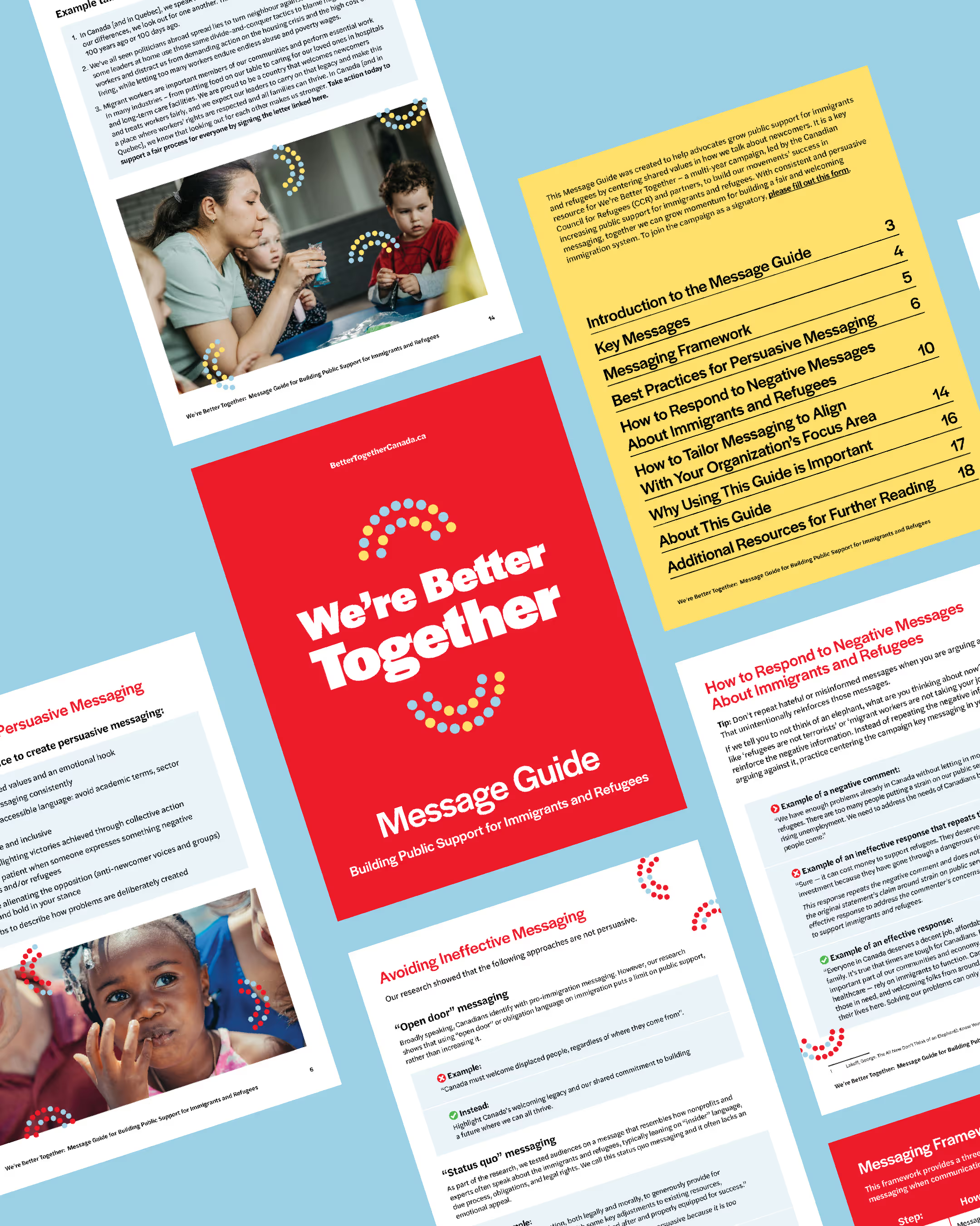
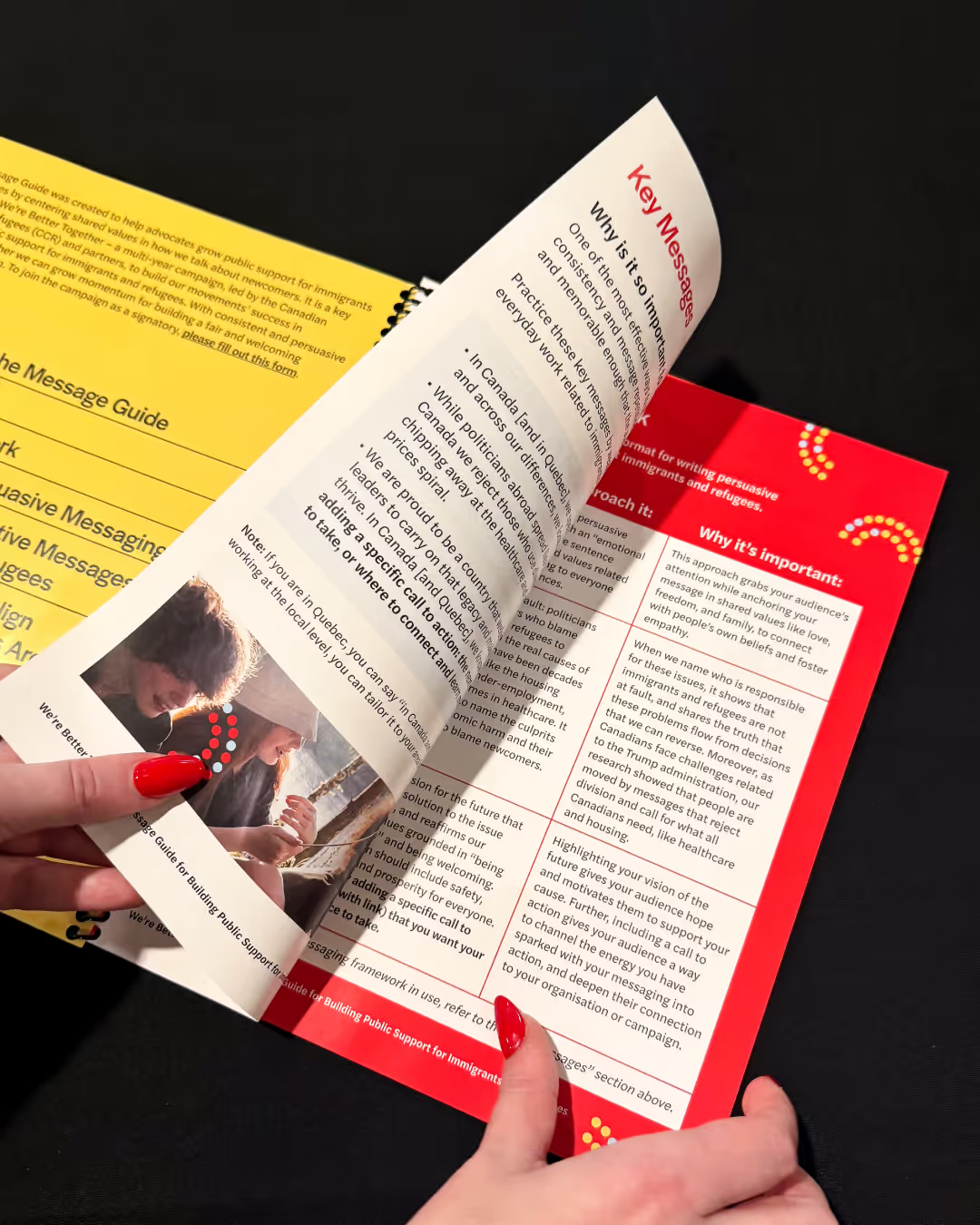
At the heart of this campaign is the We’re Better Together Message Guide, which is a practical, accessible resource designed to help people communicate more persuasively in support of immigrants and refugees.
Drawing on the messaging research, we created a publicly available Message Guide that helps advocates improve public opinion on newcomers by using emotionally resonant and evidence-based messaging. The guide offers adaptable key messages and practical examples, covering how to respond to common anti-immigrant comments.
The approach in this guide is rooted in the Race Class Gender Narrative – a proven, research-backed messaging and organizing framework that weaves together race, class, and gender in order to advance a progressive worldview and counter right-wing divide and conquer tactics.
The Message Guide is a foundational resource for the campaign, empowering partners to communicate with consistency, strength, and optimism.

Campaign Strategy and Branding
We worked with the Canadian Council for Refugees to develop a clear theory of change — highlighting that the campaign planned to equip and grow their base of supporters, in order to win over more public support for newcomers, and make that support impossible to ignore.
To inform the creation of the strategy, we worked collaboratively with their member organizations, aiming to secure the settlement sector's full participation, while also helping frontline organizations grow their campaigning capacity.
Key elements in the strategy included:
- Partner engagement
- Decentralized action
- Cross-sector collaboration
- Measurement and learning
- Training and capacity building
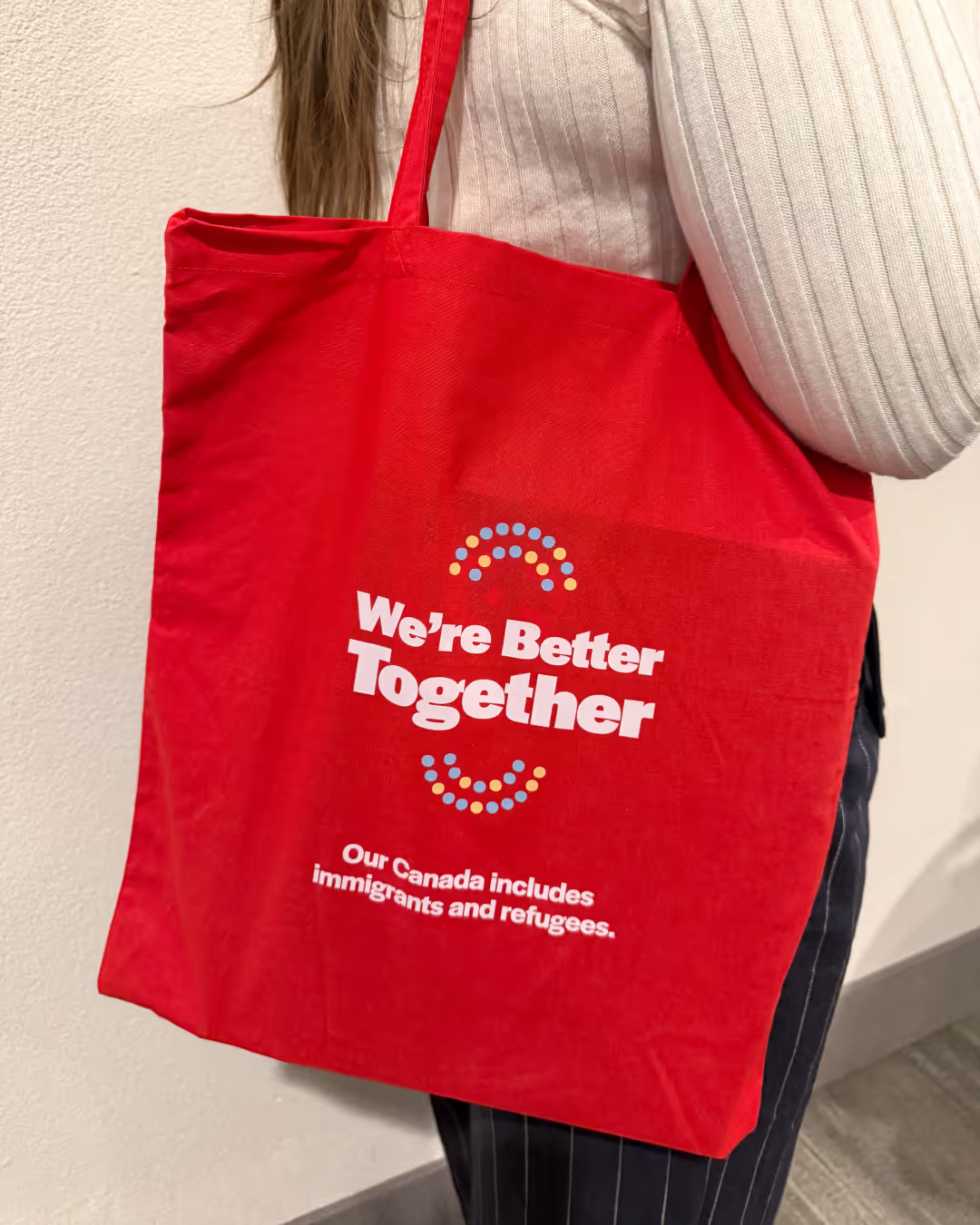
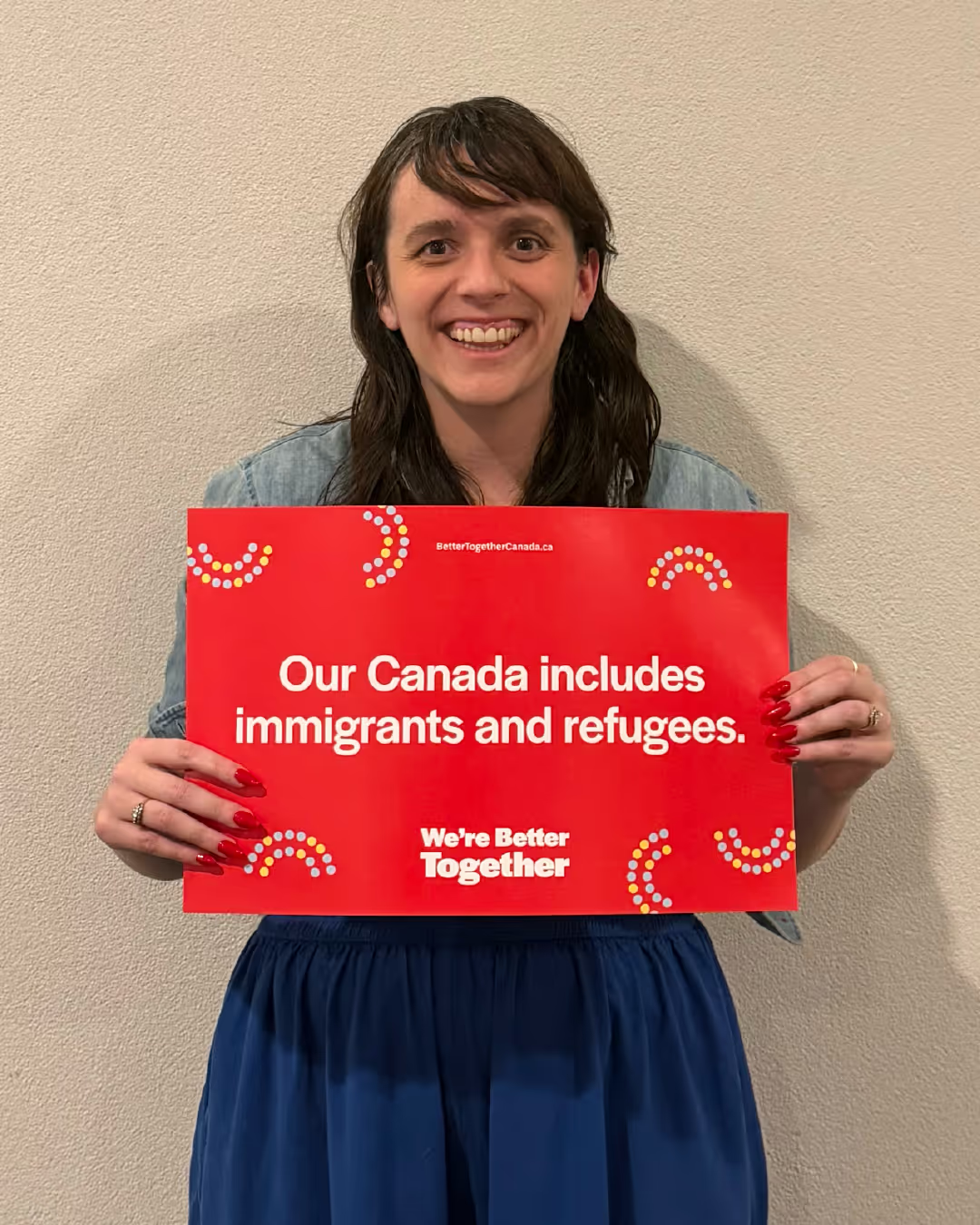
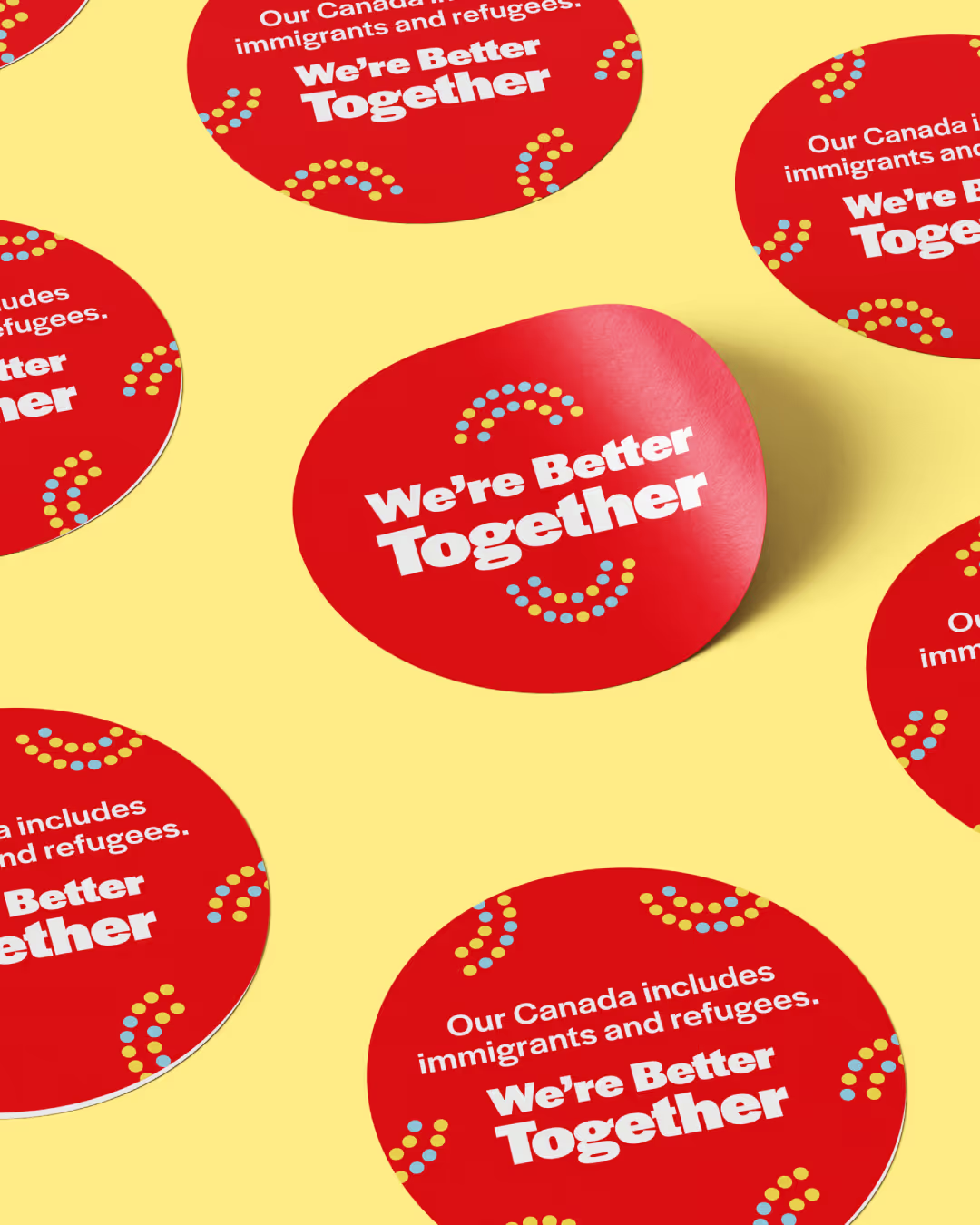
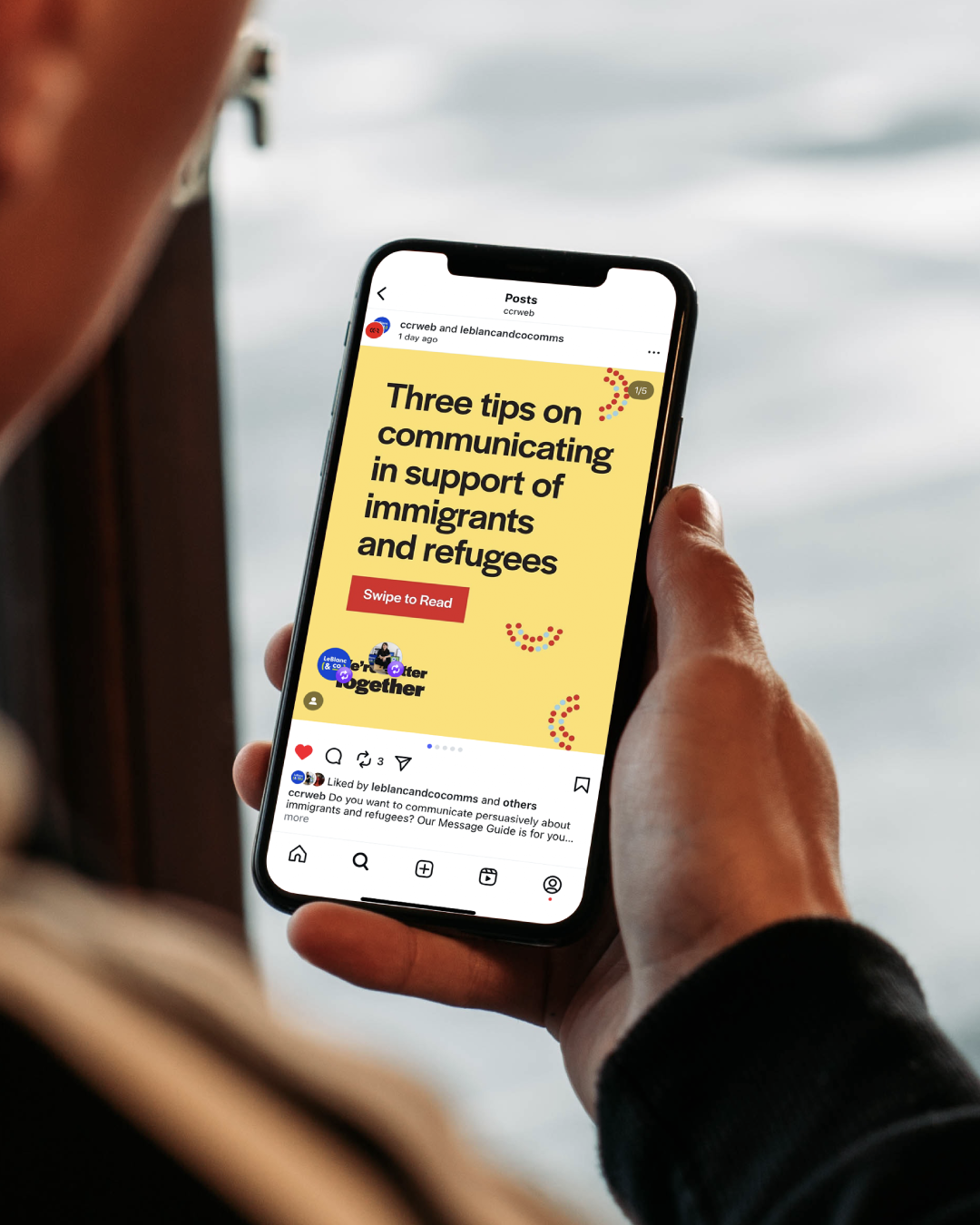
To bring the campaign to life, we developed a bold visual identity that balances optimism with credibility. The palette uses bright, uplifting colours that build on the Canadian Council for Refugees' existing brand while giving the campaign its own fresh energy. At the centre of the campaign's branding is a pair of double arcs made of multicoloured dots, an element that echoes CCR’s brand while introducing a new, dynamic motif.
We also designed a dedicated campaign microsite that centralizes the campaign’s resources, messaging, and engagement tools in one accessible hub, strengthening both partner coordination and public outreach.